
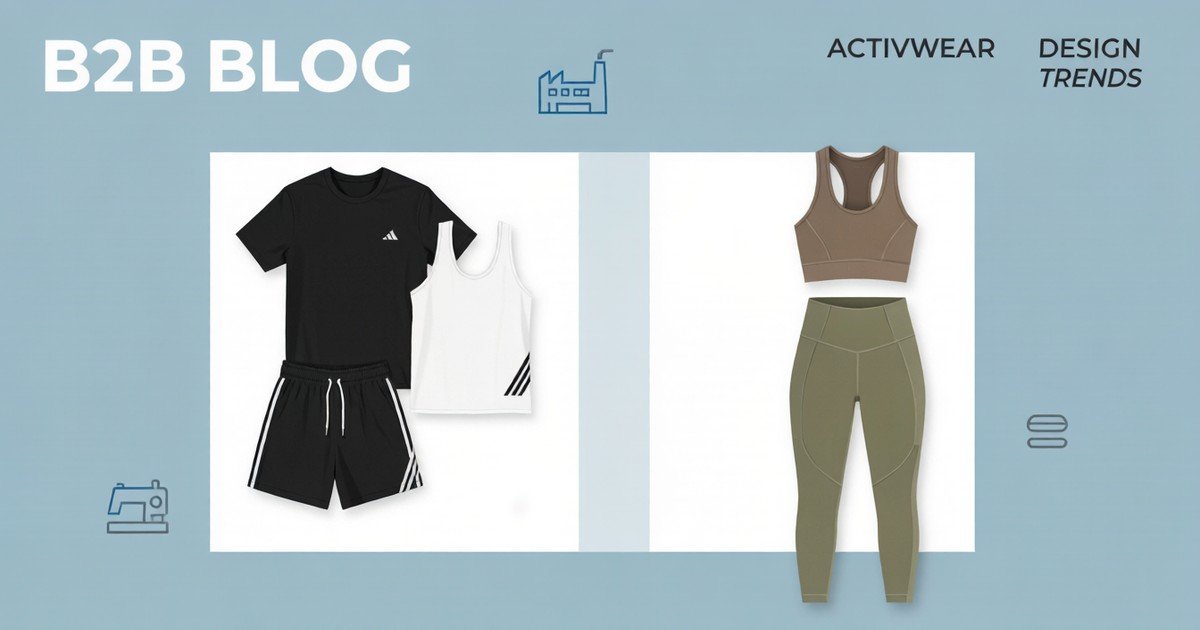
Choosing between Adidas and Gymshark as a reference model for your own activewear OEM project is less about copying a brand and more about understanding two distinct manufacturing philosophies. One is a century-old sportswear conglomerate with vertically integrated global supply chains; the other is a digital-native disruptor built on agile sourcing and community-driven product drops. For B2B buyers searching for fitness clothing manufacturers, the contrast offers a practical roadmap.
This guide breaks down how each brand approaches OEM apparel manufacturing, from factory footprint and fabric innovation to minimum order quantities, sustainability credentials, and lead-time expectations. Use it to benchmark your own private-label gym wear program.
Table of Contents
- Overview of Two Manufacturing Models
- Brand Profiles and Positioning
- Manufacturing Footprint by Region
- Fabric Innovation and Material Strategy
- Supply Chain Model and Speed to Market
- MOQ, Pricing, and Lead Time Comparison
- Sustainability and Compliance Standards
- OEM Takeaways for Fitness Brands
- Common Questions About Activewear OEM
Overview of Two Manufacturing Models
Adidas and Gymshark represent opposite ends of the activewear spectrum, yet both rely on outsourced manufacturing. Adidas operates a high-volume, multi-tier supplier network spread across Asia and increasingly near-shored regions. Its model prioritizes material science, long development cycles, and strict compliance auditing. Gymshark, launched online in 2012, built its early supply base around small-batch U.K. and European garment producers before scaling into larger Asian factories. Its model favors rapid sampling, influencer-timed drops, and shorter reorder cycles.
For an emerging fitness brand, the lesson is clear: there is no single best OEM model. The right choice depends on your target volume, price tier, and how quickly you need to restock bestselling styles. If you are evaluating fabric performance first, Adidas-style specifications may be useful. If you need fast turnaround on trend-led styles, Gymshark-style agile sourcing is more relevant.
Brand Profiles and Positioning
| Attribute | Adidas | Gymshark |
|---|---|---|
| Founded | 1949 in Germany | 2012 in the U.K. |
| Core positioning | Global performance sportswear | Community-driven fitness lifestyle |
| Primary price tier | Mid-to-premium | Accessible premium |
| Distribution | Wholesale, retail, DTC | Primarily DTC online |
| Design cadence | Seasonal + athlete collections | Frequent micro-drops |
| Typical batch size | Large-scale bulk orders | Smaller initial runs, scaled by demand |
Sources: Wikipedia – Adidas; Statista – Adidas
Manufacturing Footprint by Region
Adidas publishes detailed supplier lists and has shifted a portion of its production from China toward Vietnam, Indonesia, and India to diversify risk. The company also operates Speedfactories and partners with automated knitting facilities in Germany and the U.S. for limited regional production. This dual strategy balances cost at scale with responsiveness for localized products.
Gymshark began with British and European cut-make-trim contractors, then expanded into Turkish and Asian factories as volumes grew. Its footprint is smaller and more concentrated, which allows closer relationships with a limited set of mills but less negotiating power on raw material prices than Adidas.
| Region | Adidas Focus | Gymshark Focus |
|---|---|---|
| China | Material suppliers, components | Growing woven and knit apparel |
| Vietnam | Major footwear and apparel hub | Selected knitwear and leggings |
| Indonesia | Apparel and accessories | Limited |
| Turkey | Some European-bound apparel | Key near-shore base for Europe |
| Europe | Speedfactory/automated pilots | U.K. origins, small-batch sampling |
Fabric Innovation and Material Strategy
Adidas invests heavily in proprietary textiles. Primeknit, AEROREADY, and collaborations with material innovators define its product range. The brand also sources recycled ocean plastics through partnerships and integrates them into performance yarns. These developments require long lead times and high minimums, making them realistic reference points only for brands with established volumes.
Gymshark relies more on proven performance fabrics supplied by established mills: nylon-spandex blends for leggings, polyester-elastane for tops, and brushed fleece for loungewear. Its differentiation comes from fit, color drops, and community feedback rather than breakthrough textile chemistry. For smaller brands, this is often the more accessible path.
| Material Focus | Adidas | Gymshark |
|---|---|---|
| Signature fabrics | Primeknit, AEROREADY, Climacool | Adapt, Vital, Legacy collections |
| Recycled content | High commitment, verified supply chain | Increasing use of recycled polyester |
| Performance claims | Moisture management, temperature control | Stretch, softness, squat-proof opacity |
| Development cycle | 12–18 months for new textiles | 3–6 months for style iterations |
For a deeper look at fabric performance specifications, see our guide to four-way stretch fabric technology for activewear OEM.
Supply Chain Model and Speed to Market
Adidas runs a structured, tiered supply chain. Raw-yarn producers, fabric mills, dye houses, cut-make-trim factories, and finishing facilities operate under separate contracts. This creates complexity but enables specialized quality at each stage. Lead times are longer, but consistency is high across hundreds of thousands of units.
Gymshark’s model resembles fast-fashion agility. Smaller initial orders test demand, and factories are asked to turn reorders around quickly. This works when relationships are strong and fabric is pre-positioned, but it can create bottlenecks during viral product spikes.
| Supply Chain Trait | Adidas | Gymshark |
|---|---|---|
| Supplier tiers | Multi-tier, audited globally | Condensed, relationship-driven |
| Planning horizon | 12–24 months | 3–9 months |
| Reorder flexibility | Scheduled, large replenishment | Rapid, demand-responsive |
| Risk exposure | Geographic diversification | Concentration in fewer factories |
MOQ, Pricing, and Lead Time Comparison
Published MOQs are not available for either brand, but industry benchmarks for comparable suppliers offer a useful guide. Adidas-scale factories typically require thousands of units per colorway and longer commitment windows. Gymshark-scale suppliers historically accept lower opening quantities, though minimums rise once a style proves successful.
| Metric | Adidas-Scale OEM | Gymshark-Scale OEM |
|---|---|---|
| Typical MOQ per style | 1,500–5,000 units | 300–1,000 units |
| Price tier at factory gate | Mid-to-premium | Mid-market |
| Sample lead time | 4–8 weeks | 2–4 weeks |
| Bulk production lead time | 90–120 days | 45–75 days |
| Reorder lead time | 60–90 days | 30–45 days |
These ranges vary by product complexity and fabric availability. If your brand is still validating designs, starting with a compression wear OEM partner that accepts lower MOQs can reduce early risk.
Sustainability and Compliance Standards
Both brands publish sustainability commitments, but their execution paths differ. Adidas has long-standing audited supplier programs, chemical management protocols, and public targets for recycled content. Gymshark, as a younger company, has accelerated its compliance reporting and now publishes supplier lists and environmental goals.
| Standard | Adidas | Gymshark |
|---|---|---|
| Supplier auditing | Extensive, third-party audits | Published supplier list, growing audits |
| Recycled materials | Parley ocean plastic, recycled polyester | Recycled polyester across core lines |
| Certifications referenced | bluesign, OEKO-TEX, GRS | OEKO-TEX, GRS, WRAP-aligned facilities |
| Labor standards | FLA, SA8000-aligned programs | Code of conduct, supplier assessments |
Relevant third-party resources: OEKO-TEX; Textile Exchange / GRS; WRAP; AATCC
OEM Takeaways for Fitness Brands
Neither Adidas nor Gymshark owns the factories that make their products. Both are proof that brand strength in activewear comes from clear positioning, disciplined supplier management, and consistent product execution. When setting up your own OEM program, consider the following:
- Match your factory scale to your forecast. A 5,000-unit minimum makes sense only if your sales channels can move that volume. Start smaller if you are testing.
- Lock in fabric specs early. Fabric is usually the longest-lead component. Finalize yarn, weight, and finish before cutting samples.
- Build compliance into onboarding. Ask for OEKO-TEX, GRS, or WRAP documentation before placing the first order, not after a problem arises.
- Plan for reorders. Viral styles can sell out fast. Negotiate reorder terms and pre-position greige fabric when possible.
- Keep design distinct. Do not copy either brand’s silhouettes or logos. Use their supply-chain discipline as a benchmark, not their intellectual property.
Common Questions About Activewear OEM
Which brand is better for small-batch OEM reference
Gymshark’s early model is more relevant for small-batch testing because it relied on lower initial quantities and rapid style iterations. Adidas-scale practices become useful once volume and compliance requirements grow.
Do Adidas and Gymshark use the same factories
Some factories may overlap at the mill or cut-make-trim level, especially in Vietnam, China, and Turkey. However, each brand negotiates its own specifications, pricing, and compliance terms.
What is the most important certification for activewear OEM
OEKO-TEX Standard 100 is widely expected for skin-contact textiles. If you use recycled fibers, GRS certification adds credibility. WRAP or SA8000-aligned social audits are important for labor compliance.
How long does activewear OEM production typically take
From confirmed sample to ex-factory delivery, expect 45 to 90 days for standard styles. Complex fabric development or specialty finishes can extend this to 120 days.
Can a new brand achieve Gymshark-level speed
Speed depends on pre-approved fabrics, responsive factories, and clear tech packs. New brands can achieve 45-day turns if they limit customization and work with experienced activewear specialists.
Should I prioritize sustainability or cost when launching
Start with responsibly made basics that meet OEKO-TEX or equivalent standards, then add certified recycled or organic options as volumes justify the material premium.
