
Table of Contents
- 1. Understanding Four-Way Stretch Fabric
- 2. The Mechanics of Four-Way Stretch
- 3. Key Four-Way Stretch Fabric Types
- 4. OEM Manufacturing Process
- 5. Fabric Performance Comparison
- 6. Testing Standards and Certifications
- 7. Sourcing Considerations for Brands
- 8. Innovation and Future Trends
- 9. Common Questions About Four-Way Stretch Fabrics
Understanding Four-Way Stretch Fabric
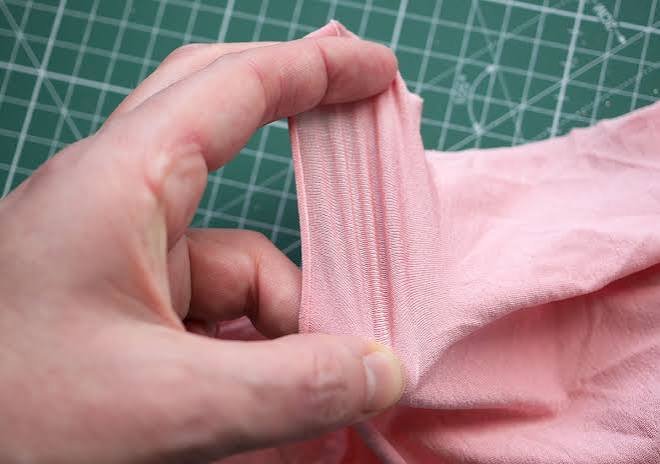
Four-way stretch fabric is one of the most critical material innovations in modern activewear manufacturing. Unlike conventional two-way stretch fabrics that only extend along one axis (typically width), four-way stretch textiles elongate both crosswise and lengthwise, providing multidirectional elasticity that moves with the wearer's body through every range of motion.
For OEM buyers and private label fitness brands, understanding four-way stretch technology is not just a design consideration. It directly impacts manufacturing costs, minimum order quantities, lead times, and end-user satisfaction. The global activewear market, valued at over $380 billion in 2025 according to Statista, continues to demand higher-performance fabrics that combine stretch, recovery, breathability, and durability.
Four-way stretch fabrics are constructed through specialized knitting techniques or elastomeric fiber blends. The most common approach integrates spandex (elastane) — a synthetic fiber known for exceptional elasticity — into the yarn structure. According to Wikipedia, spandex fibers can stretch up to 500% of their original length and recover nearly completely, making them indispensable for performance activewear.
The distinction between fabric types matters enormously for OEM production. A yoga legging requires a different stretch-recovery profile than a compression top or a running short. Brands that specify four-way stretch requirements precisely in their tech packs receive more accurate sampling, fewer production delays, and superior final products.
The Mechanics of Four-Way Stretch
Four-way stretch performance is achieved through two primary mechanisms: mechanical stretch and chemical stretch.
Mechanical Stretch
Mechanical stretch relies on knit structure rather than elastic fibers. Interlock, rib, and jersey knits can be engineered with specific loop geometries that allow the fabric to expand in multiple directions. While mechanical stretch offers superior breathability and a natural hand feel, its recovery properties are typically inferior to chemical stretch. It is commonly used in lifestyle activewear and athleisure pieces where moderate stretch suffices.
Chemical Stretch
Chemical stretch incorporates elastomeric yarns — primarily spandex, but also elastolefin and PBT (polybutylene terephthalate) — into the fabric construction. Spandex content in activewear typically ranges from 5% to 25%, with higher percentages delivering stronger compression and recovery. The spandex is either core-spun (wrapped around a rigid fiber like nylon or polyester) or bare-plated during knitting.
The critical performance metric for OEM buyers is the stretch-recovery curve. A high-quality four-way stretch fabric should achieve at least 75-90% recovery after 30 minutes of 60% extension, tested according to AATCC TM147 standards. Poor recovery leads to bagging at knees and elbows, a common complaint that damages brand reputation.
Key Four-Way Stretch Fabric Types
The activewear OEM market recognizes several distinct categories of four-way stretch fabrics, each optimized for specific end uses:
| Fabric Type | Typical Composition | Weight (GSM) | Best For | MOQ Range |
|---|---|---|---|---|
| Nylon-Spandex Knit | 75-85% Nylon, 15-25% Spandex | 180-280 | Yoga leggings, sports bras | 500-1,000 kg/color |
| Polyester-Spandex Knit | 80-90% Polyester, 10-20% Spandex | 160-250 | Training tops, compression wear | 300-800 kg/color |
| Cotton-Spandex Blend | 90-95% Cotton, 5-10% Spandex | 200-300 | Athleisure, casual gym wear | 200-500 kg/color |
| Recycled Polyester-Spandex | 75-80% rPET, 20-25% Spandex | 180-260 | Sustainable activewear lines | 500-1,200 kg/color |
| Supplex-Spandex | 80-88% Supplex Nylon, 12-20% Spandex | 200-300 | Premium yoga and Pilates wear | 800-1,500 kg/color |
Nylon-spandex blends dominate the premium segment due to their superior softness, moisture management, and colorfastness. Polyester-spandex offers better UV resistance and lower cost, making it popular for outdoor training apparel. Brands pursuing GRS (Global Recycled Standard) certification increasingly opt for recycled polyester-spandex fabrics, though these command a 15-25% price premium over virgin equivalents.
OEM Manufacturing Process
Producing four-way stretch fabric for activewear involves a carefully orchestrated sequence of steps. Each stage presents specific quality control checkpoints that OEM buyers should understand.
Yarn Selection and Preparation
The process begins with yarn sourcing. For nylon-spandex blends, manufacturers typically source nylon 6 or nylon 66 filament yarns in deniers ranging from 40D to 70D for the body yarn, paired with 20D-40D spandex. The yarn must be tested for evenness, tensile strength, and elongation before entering production. Core-spun yarns — where spandex is wrapped with nylon or polyester filaments — provide the most consistent stretch properties.
Circular Knitting
Most four-way stretch activewear fabrics are produced on single-jersey or double-jersey circular knitting machines with 28-40 gauge (needles per inch). Higher gauge machines produce finer, smoother fabrics preferred for next-to-skin applications. The knitting tension, loop length, and spandex feed rate are precisely calibrated to achieve the target stretch profile. Modern machines from brands like Santoni and Mayer & Cie offer electronic yarn feeding and real-time quality monitoring.
Dyeing and Finishing
After knitting, the greige fabric undergoes scouring, dyeing, and finishing. For four-way stretch fabrics, the heat-setting step is critical — it stabilizes the fabric dimensions and locks in the stretch characteristics. Typical heat-setting temperatures range from 180°C to 195°C for nylon-spandex and 190°C to 210°C for polyester-spandex. Incorrect heat-setting causes shrinkage, loss of elasticity, or hand-feel degradation.
Finishing treatments may include moisture-wicking, anti-microbial, UV protection, and softening agents. Each additional treatment adds $0.30-$0.80 per yard to the fabric cost and requires verification through OEKO-TEX Standard 100 or equivalent certification to ensure no harmful chemical residues remain.
Fabric Performance Comparison
The table below compares key performance attributes across the main four-way stretch fabric categories to help OEM buyers make informed sourcing decisions:
| Performance Metric | Nylon-Spandex | Polyester-Spandex | Cotton-Spandex | Recycled PET-Spandex |
|---|---|---|---|---|
| Stretch Recovery (%) | 90-95 | 85-92 | 80-88 | 85-90 |
| Moisture Wicking | Good | Excellent | Poor | Very Good |
| Colorfastness (Rating 1-5) | 4.0-4.5 | 4.5-5.0 | 3.5-4.0 | 4.0-4.5 |
| Pilling Resistance | Excellent | Good | Fair | Good |
| Fabric Cost ($/yard) | 3.50-5.50 | 2.00-3.50 | 2.50-4.00 | 2.80-4.50 |
| Typical Lead Time (days) | 25-35 | 20-30 | 15-25 | 30-40 |
| Sustainability Score | Moderate | Low (virgin) | Moderate | High |
Nylon-spandex consistently outperforms on recovery and hand feel, justifying its higher price point for premium activewear lines. Polyester-spandex provides the best value-to-performance ratio for mid-market brands, particularly those focusing on moisture management. Brands interested in sourcing guidance for fabric selection can refer to our detailed moisture-wicking fabric selection guide for additional technical specifications.
Testing Standards and Certifications
OEM buyers must specify testing requirements in their purchase agreements to guarantee fabric quality. The following standards are the most relevant for four-way stretch activewear:
- ASTM D2594 — Standard test method for stretch properties of knitted fabrics. Measures fabric growth and recovery after specified extension. This is the baseline standard that most major brands reference in their quality manuals.
- AATCC TM147 — Test method for dimensional changes of knit garments. Critical for verifying that four-way stretch garments retain their shape after home laundering.
- ISO 20932 — Determination of elasticity of fabrics using a constant-rate-of-extension (CRE) tester. The international equivalent of ASTM D2594, preferred by European and Asian manufacturers.
- OEKO-TEX Standard 100 — Certifies that every component of the fabric is free from harmful substances. Nearly all reputable OEM factories producing for EU and North American markets carry this certification.
- WRAP (Worldwide Responsible Accredited Production) — Social compliance certification verifying ethical manufacturing practices at the factory level.
For brands targeting the premium segment, specifying both OEKO-TEX and WRAP certifications in the supplier qualification process reduces risk and supports marketing claims. Our activewear performance testing guide covers additional quality control protocols applicable to finished garments.
Sourcing Considerations for Brands
When sourcing four-way stretch fabrics for OEM production, brands should evaluate suppliers across several dimensions:
Supplier Qualification Checklist
- Minimum stretch-recovery guarantee: Request lab test reports showing ≥85% recovery after 30 minutes at 60% extension
- Color consistency: Verify delta E ≤1.0 for bulk-to-lab-dip matching, especially for nylon-spandex blends
- Lead time capability: Standard fabric lead times are 20-40 days; flexible suppliers offering 15-20 day expedited options provide competitive advantage
- MOQ flexibility: Established mills often require 500-1,000 kg per color; newer suppliers may accept 200-300 kg for sampling and small-batch production
- Testing lab partnerships: Preferred suppliers maintain relationships with accredited labs such as SGS, Intertek, or Bureau Veritas for third-party verification
Cost Structure Breakdown
A full understanding of cost components prevents surprise charges during production. The following table breaks down typical costs for a standard 220 GSM nylon-spandex four-way stretch fabric:
| Cost Component | Percentage of Total | Typical Range ($/yard) |
|---|---|---|
| Raw yarn (nylon + spandex) | 45-55% | 1.60-2.75 |
| Knitting | 12-18% | 0.40-0.80 |
| Dyeing and finishing | 18-25% | 0.65-1.20 |
| Quality inspection | 5-8% | 0.18-0.40 |
| Certification and compliance | 3-5% | 0.10-0.25 |
| Logistics and overhead | 5-10% | 0.20-0.50 |
Yarn costs are the dominant factor, driven by global petroleum prices for synthetic fibers and supply-demand dynamics for spandex. Brands can reduce costs by 8-12% by ordering full container loads and negotiating annual volume commitments with mills.
Innovation and Future Trends
The four-way stretch fabric market continues to evolve rapidly, driven by three major trends:
1. Bio-Based Spandex Alternatives. Traditional spandex is petroleum-derived and non-biodegradable. Companies like Hyosung (creora bio-based) and Invista (LYCRA EcoMade) are developing spandex with 20-30% bio-based content derived from corn or sugarcane. While currently 40-60% more expensive than conventional spandex, these materials are gaining traction among sustainability-focused brands.
2. Recycled Content Integration. The Global Recycled Standard (GRS) now certifies fabrics with ≥20% recycled content. Leading mills in China and Taiwan are producing four-way stretch fabrics with 50-75% recycled polyester content, meeting the growing demand for circular economy solutions in activewear manufacturing.
3. Smart Textile Integration. Emerging technologies embed conductive yarns or sensors into four-way stretch fabrics without compromising elasticity. Applications include biometric monitoring compression wear and heated training apparel. While still niche, OEM factories in Shenzhen and Shanghai are investing in the specialized knitting equipment required for these hybrid fabrics.
The next five years will likely see wider adoption of mono-material four-way stretch fabrics — polyester-elastolefin or nylon-elastolefin blends that can be fully recycled without separating fiber types. This addresses a major circular economy challenge in the activewear industry, where mixed-fiber fabrics are difficult to recycle.
Common Questions About Four-Way Stretch Fabrics
How does four-way stretch differ from two-way stretch in practical terms
Two-way stretch fabrics extend only along the width (weft direction) or length (warp direction), while four-way stretch extends in both directions simultaneously. For activewear, this means four-way stretch garments conform to the body during compound movements like squats, lunges, and overhead reaches without restricting mobility or riding up. Two-way stretch is typically sufficient for casual t-shirts and basic shorts but inadequate for performance leggings and compression tops.
What is the ideal spandex percentage for gym leggings
For performance gym leggings, 15-22% spandex content provides the optimal balance of compression, recovery, and comfort. Below 12%, recovery suffers and the fabric may bag at the knees after repeated wear. Above 25%, the fabric becomes overly compressive, potentially restricting circulation during extended wear. Yoga leggings typically use 12-18% spandex for a softer, less compressive feel.
Can four-way stretch fabrics be made from recycled materials
Yes. Recycled polyester (rPET) blended with spandex is the most common sustainable four-way stretch option. GRS-certified fabrics with 50-78% recycled content are available from suppliers in China, Taiwan, and South Korea. Recycled nylon (Econyl, REPREVE) options are also growing, though they currently represent a smaller share of the market. The main limitation is that spandex itself remains difficult to recycle at scale, though bio-based alternatives are emerging.
What testing should OEM buyers request before bulk production
At minimum, OEM buyers should request: 1) ASTM D2594 stretch and recovery test reports, 2) AATCC TM147 dimensional stability (shrinkage) reports, 3) colorfastness to washing (AATCC 61), perspiration (AATCC 15), and light (AATCC 16), 4) OEKO-TEX Standard 100 certification for chemical safety, and 5) pilling resistance (ASTM D3512). For brands marketing sustainability claims, GRS transaction certificates should also be obtained.
Why do some four-way stretch fabrics lose elasticity over time
Elasticity degradation occurs primarily due to three factors: 1) spandex fiber fatigue from repeated stretching and laundering at high temperatures, 2) heat damage during the garment manufacturing process (excessive ironing or curing temperatures above 195°C can permanently damage spandex), and 3) chemical degradation from chlorine bleach, fabric softeners, or aggressive detergents. Quality four-way stretch fabrics should maintain at least 80% of their original recovery properties after 50 home launderings.
How do MOQs for four-way stretch fabrics vary by region
Chinese fabric mills typically require 500-1,000 kg per color for nylon-spandex and 300-800 kg for polyester-spandex. Taiwanese and South Korean suppliers generally have higher MOQs (800-1,500 kg) but offer superior quality consistency and faster R&D turnaround for custom developments. Southeast Asian mills in Vietnam and Indonesia accept lower MOQs (200-500 kg) but have fewer specialty finishing capabilities. European mills (Italy, Portugal) command premium pricing with MOQs of 100-300 kg, suitable for luxury athleisure brands.
