
Overview
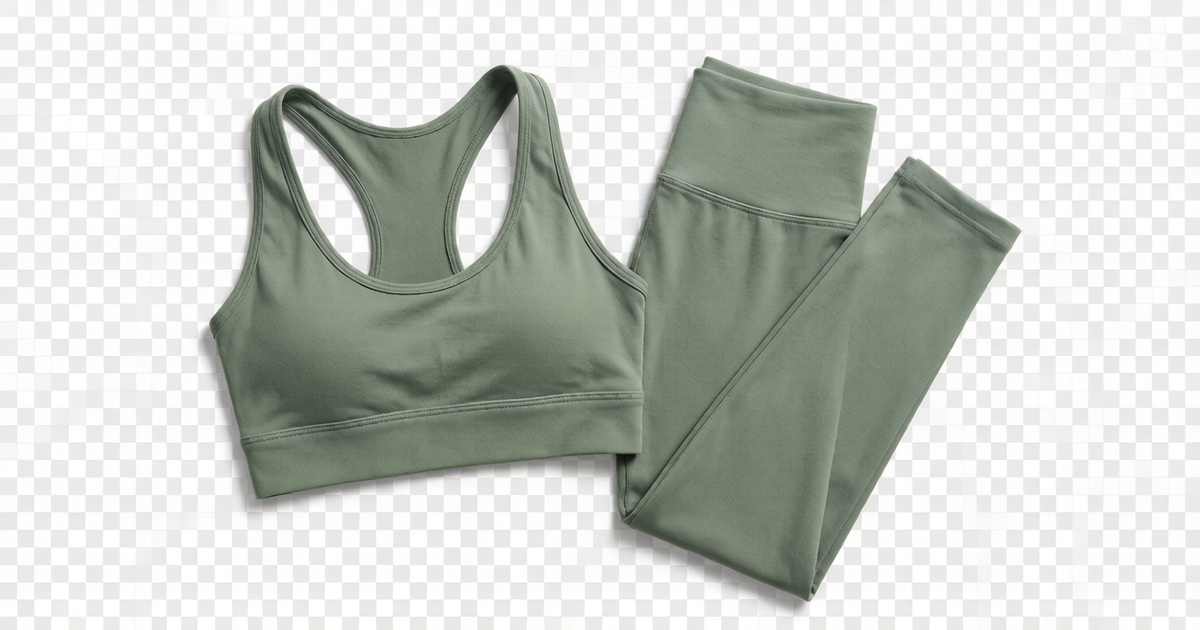
Matching yoga sets have become one of the strongest entries in the boutique activewear market. A yoga set OEM program lets fitness brands launch coordinated tops and bottoms under one private label, simplifying sourcing while increasing average order value. This guide explains how fitness brands design, source, and manufacture custom yoga sets with overseas partners, with a focus on factories in China.
The global activewear market is projected to keep growing as consumers replace casual wardrobes with performance pieces. According to Statista Sportswear Market Data, demand for coordinated sportswear is rising in North America and Europe. For emerging brands, yoga sets offer a clear way to compete: one design concept, two SKUs, and a higher perceived value than separates.
Table of Contents
- Overview
- Why Yoga Sets Are a High-Margin Category
- Key Components of a Yoga Set
- Top Manufacturing Regions in China
- Factory Selection Checklist
- Cost Breakdown and MOQ
- Fabric and Sustainability Standards
- Customization Options
- Common Questions About Yoga Set OEM
Why Yoga Sets Are a High-Margin Category
Fitness customers increasingly buy complete looks rather than individual pieces. A yoga set pairs a sports bra or crop top with leggings or shorts in matching colorways and fabric. The result is a cohesive product that photographs well and sells at a premium compared to mismatched separates.
From a brand operations perspective, yoga set OEM offers several advantages:
- Higher basket size: Shoppers buy two pieces at once rather than one.
- Lower design overhead: One fabric range and one color card cover multiple SKUs.
- Better inventory control: Sets can be sold as bundles or broken into separates later.
- Stronger social content: Coordinated outfits perform better on visual platforms.
Brands that want to expand beyond leggings can read our earlier guide on yoga leggings manufacturers in China to understand the foundation of this supply chain.
Key Components of a Yoga Set
A typical yoga set has two components: a top and a bottom. The exact combination depends on the target audience and price point. Some brands offer three-piece sets that include a layering item such as a lightweight jacket or crop hoodie.
| Component | Common Styles | Key Features |
|---|---|---|
| Top | Sports bra, crop tank, longline bra | Removable pads, four-way stretch, sweat-wicking |
| Bottom | Leggings, biker shorts, flared pants | High waist, gusset, squat-proof fabric |
| Layering piece | Crop hoodie, mesh jacket, oversized tee | Lightweight, breathable, matching dye lot |
The most important detail is consistency. The top and bottom must come from the same dye lot and use identical fabric weight so the set looks like one product rather than two random items. Learn more about fabric consistency in our seamless activewear manufacturing guide.
Top Manufacturing Regions in China
China has several regions that specialize in activewear production. Each region has its own strengths, so the best location depends on product complexity, order size, and fabric requirements.
| Region | Specialty | Typical MOQ | Lead Time |
|---|---|---|---|
| Guangdong | Full-package activewear, fast sampling | 100-300 pieces | 15-25 days |
| Zhejiang | Knitted fabrics and seamless production | 200-500 pieces | 20-30 days |
| Fujian | Swimwear crossover and performance tops | 300-500 pieces | 25-35 days |
| Jiangsu | High-volume basics and cost efficiency | 500+ pieces | 20-28 days |
Guangdong is usually the best starting point for brands that need quick turnaround and small minimums. Zhejiang works well for seamless yoga sets or brushed fabric styles. Fujian is a strong option when the top involves swim-style details such as strappy backs or lining.
Factory Selection Checklist
Not every factory that makes leggings can produce a quality yoga set. The partner must coordinate multiple components, match colors across styles, and handle trims such as elastic bands, removable cups, and care labels.
Use this checklist when evaluating a yoga set OEM partner:
- Sample quality: Request a full set sample, not just a swatch or single piece.
- Dye lot control: Confirm the factory can dye top and bottom fabric in the same batch.
- Trim sourcing: Ask about elastic, thread, pads, and label suppliers.
- Size grading: Verify the factory can grade the set consistently from XS to XL+.
- Packaging: Check whether polybags, hang tags, and inserts are included.
- Communication: Look for English-speaking staff and clear tech pack processes.
Cost Breakdown and MOQ
Pricing for yoga set OEM depends on fabric choice, construction complexity, and order volume. The table below shows typical factory costs per set at different volume tiers.
| Order Volume | Basic Set Price | Premium Set Price | Sample Cost |
|---|---|---|---|
| 100-299 sets | $12-16 | $18-24 | $50-80 per style |
| 300-499 sets | $10-13 | $15-20 | $40-60 per style |
| 500-999 sets | $8-11 | $13-17 | Refundable with order |
| 1,000+ sets | $7-9 | $11-14 | Refundable with order |
Most factories require a minimum of 100 to 300 sets per color for the first order. Some will allow mixed sizes within that minimum, but the ratio must be agreed before production begins. Premium pricing reflects seamless construction, branded hardware, or specialized fabrics such as recycled nylon or bio-based elastane.
Fabric and Sustainability Standards
Fabric selection defines how a yoga set feels, performs, and ages. The most common choices are polyester-spandex blends and nylon-spandex blends. Each has distinct characteristics:
- Polyester-spandex: More affordable, durable color, slightly less soft.
- Nylon-spandex: Softer hand feel, better drape, higher cost.
- Recycled polyester: Popular with sustainable brands, often certified to Global Recycled Standard.
- Bio-based elastane: Emerging option made from renewable feedstocks.
Sustainability certifications help brands market their products responsibly. Key standards include OEKO-TEX Standard 100 for harmful substance testing and WRAP for ethical manufacturing. These certifications are especially important when selling into the European Union or North America, where buyers increasingly request documentation.
For a broader look at activewear materials, see the Wikipedia entry on yoga pants, which explains the history and technical development of performance bottoms.
Customization Options
A successful yoga set OEM program usually includes multiple customization layers. Brands can differentiate through color, construction, and branding details.
Common customization options include:
- Custom color matching: Pantone or dyed-to-match fabric development.
- Logo application: Heat transfer, rubber patch, embroidery, or woven label.
- Packaging: Branded polybags, tissue paper, and hang tags.
- Hardware: Adjustable straps, metal clasps, or branded elastic.
- Size inclusivity: Extended size ranges and adjusted grading.
Brands should start with a clear tech pack that includes flat sketches, measurements, material specs, and color references. The more detail provided upfront, the fewer rounds of sampling are needed.
Common Questions About Yoga Set OEM
What defines a matching yoga set
A matching yoga set is a coordinated combination of top and bottom pieces made from the same fabric and color. The goal is a unified look that can be sold together as a single product or styled as separates.
Which fabric works best for yoga sets
Nylon-spandex blends are preferred for premium softness and drape. Polyester-spandex blends are common for entry-level and performance-focused sets because they hold color well and resist pilling.
Typical MOQ for yoga set orders
Most yoga set OEM factories require 100 to 300 sets per color for the first order. Larger or more complex sets may require 500 sets depending on fabric minimums and construction.
How long does yoga set production take
From sample approval, production usually takes 20 to 35 days. Sampling itself can take 7 to 14 days depending on fabric availability and design complexity.
Can brands mix sizes and colors within one order
Yes, most factories allow size splits within a color run. The exact ratio must be confirmed before cutting. Some factories charge a small fee for very complex size ratios.
What certifications matter most for yoga set factories
OEKO-TEX Standard 100, GRS for recycled materials, and WRAP for social compliance are the most commonly requested certifications by international buyers.
