
Table of Contents
- Understanding Seamless Activewear Technology
- Seamless vs Cut-and-Sew: Key Differences
- The Seamless Manufacturing Process
- Key Benefits for Fitness Brands
- Sourcing Custom Seamless Activewear
- Frequently Asked Questions
Understanding Seamless Activewear Technology
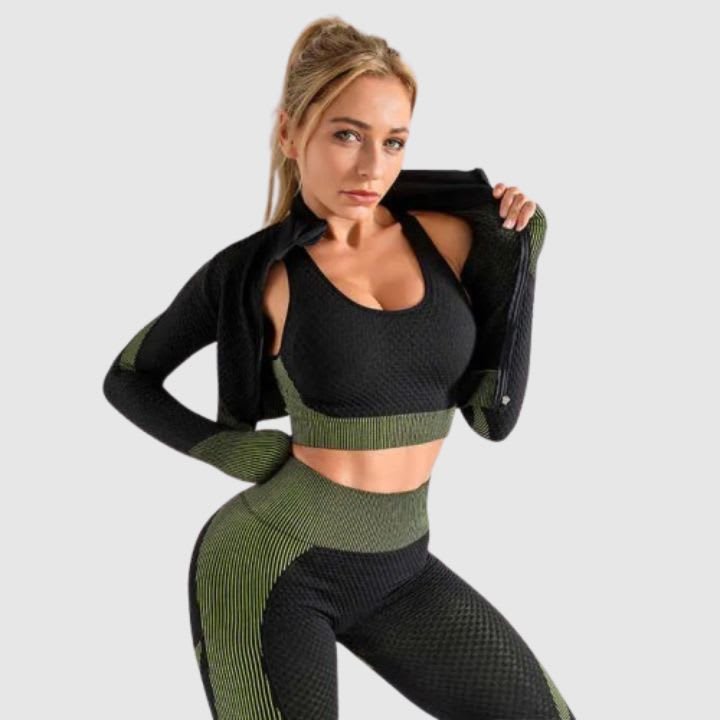
Seamless activewear represents one of the most significant technological advancements in modern sportswear manufacturing. Unlike traditional cut-and-sew garments assembled from multiple fabric pieces stitched together, seamless garments are produced using advanced circular knitting machines that create entire garment panels in a single continuous process. This technology, pioneered by companies like Santoni, eliminates the need for side seams, shoulder seams, and other joining points that can cause irritation during high-intensity workouts.
The global seamless activewear market is projected to grow from approximately $25.6 billion in 2026 to over $48 billion by 2035, according to Global Growth Insights. This rapid expansion reflects growing consumer demand for higher-performing, more comfortable athletic apparel. The broader activewear market reached $430 billion in 2025 with a CAGR of 7.1%, as reported by GM Insights, making seamless technology a critical differentiator for brands looking to capture market share.
At its core, seamless knitting technology uses computerized circular knitting machines that can precisely control yarn tension, stitch density, and fabric structure at specific zones within a single garment. This allows manufacturers to engineer different functional zones — compression, ventilation, support — all within one continuous piece of fabric, without any stitching required.
Seamless vs Cut-and-Sew: Key Differences
For fitness brands deciding between manufacturing methods, understanding the fundamental differences is essential. Both approaches have their place in the market, but they serve different brand positioning strategies and price points.
| Feature | Seamless Knitting | Cut-and-Sew |
|---|---|---|
| Construction Method | Single-piece circular knitting | Multiple fabric pieces stitched together |
| Seam Count | Minimal to zero seams | Multiple seams (sides, shoulders, gussets) |
| Comfort Level | Superior — no chafing or irritation | Good — possible seam friction during movement |
| Design Flexibility | Moderate — limited by knitting machine capabilities | High — virtually unlimited pattern possibilities |
| Production Speed | Faster — fewer post-production steps | Slower — requires cutting, sewing, and finishing |
| MOQ (Minimum Order) | Typically 300-500 pieces per style | Typically 50-200 pieces per style |
| Unit Cost | Higher — specialized machinery required | Lower — wider factory availability |
| Fabric Waste | Minimal — knit-to-shape technology | Moderate — cutting process generates waste |
| Best For | Premium positioning, performance-focused brands | Fast fashion, seasonal collections, budget lines |
Seamless construction excels in categories like sports bras, leggings, base layers, and compression wear — products where skin contact and freedom of movement are paramount. Cut-and-sew remains dominant for structured outerwear, jackets, and garments requiring complex design details like pockets, zippers, and paneling.
The Seamless Manufacturing Process
Understanding the manufacturing workflow helps brands communicate effectively with factories and make informed sourcing decisions. The seamless production process follows a distinctive sequence compared to traditional garment manufacturing.
1. Yarn Selection and Preparation
The process begins with yarn selection — arguably the most critical factor in final product quality. Common yarn choices for seamless activewear include nylon for durability, polyester for moisture-wicking, spandex or elastane for stretch, and specialty yarns like polypropylene for thermal regulation. Many premium manufacturers use yarns certified by OEKO-TEX Standard 100 to ensure the absence of harmful substances.
2. Digital Design and Programming
Garment specifications are programmed into the circular knitting machine's computer system. This digital file controls every aspect of the knit: stitch type, yarn feeder selection, tension levels, and zone-specific properties. Designers can map compression zones, mesh ventilation panels, and ribbed support structures directly into the digital pattern.
3. Circular Knitting Production
Yarn is fed into a circular knitting machine, which produces a tubular fabric structure. For seamless garments, the machine creates a three-dimensional tube that already approximates the body's shape. Advanced machines like the Santoni Top2 series can produce complete garment bodies in under 3 minutes per piece, with integrated elastic waistbands, shaped leg openings, and graduated compression zones.
4. Post-Processing and Finishing
After knitting, garments undergo several finishing steps: heat setting to stabilize dimensions, trimming of loose yarns, application of silicone grippers or bonding tapes, and quality inspection. Some manufacturers apply antimicrobial treatments or moisture-wicking finishes at this stage to enhance performance properties.
5. Quality Control and Certification
Reputable manufacturers conduct multi-point quality inspections covering dimensional accuracy, seam strength (where applicable), colorfastness, and fabric performance. Facilities with certifications such as WRAP (Worldwide Responsible Accredited Production) or BSCI provide additional assurance of ethical manufacturing practices.
Key Benefits for Fitness Brands
For fitness brands considering seamless activewear, several strategic benefits make this technology worth the investment.
Enhanced Brand Perception. Seamless garments carry a premium connotation in the consumer market. The visible absence of traditional stitching creates a sleek, high-tech aesthetic that supports higher retail price points — often 25-40% above comparable cut-and-sew products.
Performance Advantages. The absence of friction-causing seams dramatically improves comfort during high-repetition movements like running, HIIT training, and yoga. Zone-engineered compression can be precisely mapped to muscle groups — tighter compression around key muscle areas for support, looser knitting at joints for unrestricted mobility.
Sustainability Credentials. The knit-to-shape nature of seamless production generates significantly less fabric waste than cut-and-sew methods. According to Textile Exchange, the fashion industry generates approximately 92 million tons of textile waste annually — seamless technology directly addresses this by minimizing cutting waste. Brands can further enhance their sustainability story by using GRS-certified recycled yarns in seamless production.
Faster Time-to-Market. With fewer production steps (no cutting, fewer assembly operations), seamless garments can move from yarn to finished product more quickly than traditional constructions. This agility benefits brands operating with seasonal drops or responding to fast-moving fitness trends.
Sourcing Custom Seamless Activewear
Finding the right manufacturing partner for seamless activewear requires different criteria than conventional cut-and-sew sourcing. Here is what brands should evaluate.
| Sourcing Factor | What to Look For | Why It Matters |
|---|---|---|
| Machine Park | Santoni, Lonati, or comparable circular knitting machines; minimum 20+ machines for reliable capacity | Machine brand and count determine production capability and consistency |
| MOQ Flexibility | 300-500 pcs/style for full custom; 100-200 pcs for stock-design customization | Lower MOQs reduce inventory risk for testing new styles |
| Yarn Sourcing | Direct relationships with yarn mills; OEKO-TEX or GRS certified yarn options | Yarn quality directly impacts garment performance and brand sustainability claims |
| Design Support | In-house digital programming team; 3D virtual sampling capability | Reduces sampling iterations and speeds development process |
| Certifications | WRAP, BSCI, SEDEX, ISO 9001; OEKO-TEX for materials | Third-party certifications validate ethical and quality standards |
| Lead Time | 25-35 days for sampling; 45-60 days for bulk production | Realistic lead times enable accurate launch planning |
| Private Label Services | Custom labeling, hang tags, packaging; brand-specific color matching | Full private label capability creates cohesive brand presentation |
China remains the dominant hub for seamless activewear manufacturing, with major production clusters in Yiwu, Dongguan, and Fujian province. These regions host specialized seamless factories with significant machine capacity and established export logistics. When evaluating manufacturers, request a virtual or in-person factory tour, verify machine specifications, and always order a pre-production sample before committing to bulk orders.
For brands already working with a cut-and-sew supplier, transitioning to seamless may require finding a specialist partner. Many conventional garment factories do not own circular knitting equipment, making seamless production a distinct supply chain with its own ecosystem of yarn mills, knitting facilities, and finishing houses. Working with an experienced sourcing agent or a full-service manufacturer like FukiGymwear can simplify navigating this specialized supply chain — particularly helpful for brands exploring seamless for the first time.
Brands expanding into seamless should also consider how these new products integrate with their existing line. A custom sports bra program often serves as the entry point into seamless manufacturing, as bras benefit most directly from seamless construction's comfort and support advantages.
Frequently Asked Questions
What is the typical MOQ for seamless activewear manufacturing
Most seamless factories require minimum orders of 300-500 pieces per style and color combination. Some manufacturers offer lower MOQs of 100-200 pieces for stock-design customization where only colors and branding are modified. Start-up fitness brands should budget for higher per-unit costs at low volumes and negotiate MOQ reductions as order history develops.
How does seamless activewear pricing compare to cut-and-sew
Seamless garments typically cost 20-35% more than equivalent cut-and-sew products at wholesale. This premium reflects specialized machinery costs, higher-grade yarn requirements, and the technical expertise needed for digital pattern programming. However, brands can often command 40-60% higher retail prices for seamless products, maintaining healthy margins despite higher production costs.
Can seamless activewear be customized with prints and logos
Yes. Seamless garments support multiple decoration techniques including sublimation printing, heat transfer, silicone printing, and embroidery. Sublimation works particularly well on seamless polyester-nylon blends, allowing full-coverage graphic designs. Silicone logos and heat-transfer labels are commonly used for brand identification without compromising the seamless aesthetic.
What certifications should a seamless activewear manufacturer have
Key certifications to verify include WRAP or BSCI for social compliance, OEKO-TEX Standard 100 for chemical safety, and ISO 9001 for quality management. For brands emphasizing sustainability, look for GRS (Global Recycled Standard) certification if using recycled yarns. These certifications provide independent verification of manufacturing claims and are increasingly required by major retail buyers.
Which product categories benefit most from seamless construction
Sports bras, leggings, base layers, and compression tops are the categories where seamless construction delivers the greatest performance advantages. These products involve high skin contact and repetitive movement, making chafe-free seams and zoned compression most valuable. Yoga sets, recovery wear, and maternity activewear are additional categories where seamless technology creates meaningful product differentiation.
What is the typical lead time for seamless activewear production
Standard lead times range from 25-35 days for sampling (including digital pattern development and 2-3 physical sample rounds) and 45-60 days for bulk production. Factors that can extend timelines include custom yarn development, complex multi-zone designs, and peak season ordering (typically March-May and August-October). Brands should plan for a total development-to-delivery timeline of approximately 12-16 weeks for new seamless product launches.
