
Manufacturing high-performance activewear is significantly more complex than producing standard fashion. Because the garments are designed to be stretched, sweated in, and washed frequently, there are dozens of technical variables that can go wrong. If one link in the chain fails, the entire batch could be unsellable.
At Fuki Gymwear, we believe in proactive risk management. Here are the most common pitfalls in gym wear production and how to navigate them.
Table of Contents
- The High Stakes of Performance Gear
- 1. Fabric Performance Failures
- 2. Sizing Drift and Grading Errors
- 3. Structural Seam Failure (The 'Snap' Test)
- 4. Color Bleeding and Crocking
- 5. Trim and Accessory Malfunctions
- Risk Mitigation Checklist
- FAQ
- Conclusion
The High Stakes of Performance Gear
In regular apparel, a loose thread is a minor nuisance. In activewear, a loose thread in a compression legging can lead to a total seam blowout during a heavy squat. Because athletes rely on their gear for safety and confidence, the margin for error is nearly zero.
1. Fabric Performance Failures
Fabric is the most expensive component and the most likely to fail.
- The Risk: The fabric feels great in the hand but fails the "Squat Test" (transparency) or pills after just two washes.
- The Cause: Using low-density knits or failing to apply anti-pilling treatments at the mill.
- Prevention: Always request a Quality Control Report that includes a stretch-recovery test.
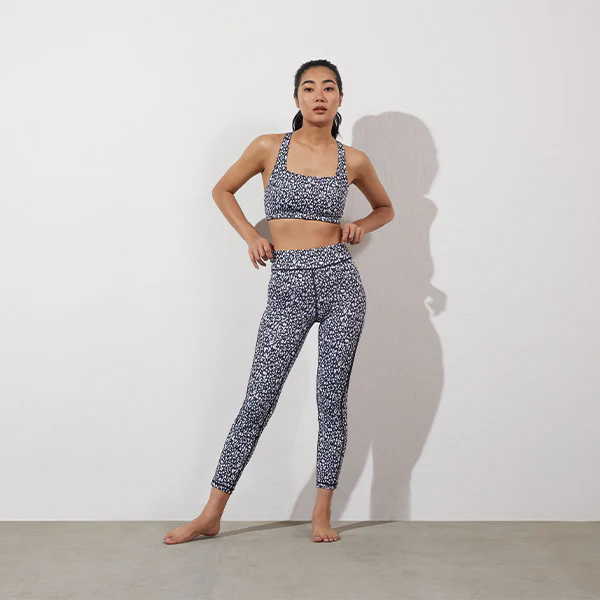
2. Sizing Drift and Grading Errors
Activewear fabrics have high elastane content, which makes them difficult to cut accurately.
- The Risk: The "Medium" from the first order fits differently than the "Medium" from the second order.
- The Cause: Fabric shrinkage during the dyeing process or inaccurate "marker" placement during cutting.
- Prevention: Ensure your factory uses CAD/CAM cutting systems to maintain Technical Standards.
3. Structural Seam Failure (The 'Snap' Test)
Activewear requires specialized "stretch" threads.
- The Risk: The seams look perfect but "snap" or pop when the wearer puts the garment on.
- The Cause: Using standard polyester thread instead of high-elasticity nylon thread, or incorrect tension on the Flatlock machinery.
- Prevention: Insist on 4-needle 6-thread construction for all high-stress areas.
4. Color Bleeding and Crocking
High-contrast designs (like a white logo on black leggings) are prone to issues.
- The Risk: The black dye bleeds into the white logo after the first wash, or the dye rubs off on the customer's skin (crocking).
- The Cause: Poor "color fixation" at the dye house or low-quality chemical dyes.
- Prevention: Require a "wash-test" report during the Pre-Production Phase.
5. Trim and Accessory Malfunctions
It’s often the small parts that fail.
- The Risk: Zippers that jam, drawstrings that pull out, or heat-transfer logos that peel off after a single workout.
- The Cause: Using non-brand zippers or applying heat transfers at the wrong temperature/pressure.
- Prevention: Always source branded hardware (like YKK) and conduct "peel tests" on all logos.
Risk Mitigation Checklist
| Manufacturing Risk | Detection Method | Brand Protection |
|---|---|---|
| Transparency | The Squat Test | High-GSM Interlock Knits |
| Durability | 50-Wash Cycle Test | Anti-Pilling Treatments |
| Fit Issues | PP Sample Fitting | Strict Grading Sheets |
| Seam Strength | Tensile Stress Test | Flatlock Stitching |
👉 Avoid Manufacturing Disasters with Fuki Gymwear
FAQ
How do I handle a batch with quality issues?
This should be covered in your Manufacturing Agreement. Reliable partners like Fuki Gymwear offer rework or replacement for units that do not meet the AQL 2.5 standard.
Why is activewear harder to manufacture than cotton tees?
High-stretch fabrics are "unstable." They move and shift during cutting and sewing, requiring specialized tension-control machines that standard factories do not possess.
Can I prevent all risks?
While you can't prevent 100% of human error, you can eliminate 95% of risks through a robust Tech Pack and a rigorous Sampling Process.
Conclusion
Manufacturing gym wear is a technical challenge where "good enough" is never enough. By identifying the risks of fabric failure, sizing drift, and seam weakness early in the cycle, you protect your brand's reputation and your financial investment.
At Fuki Gymwear, we pride ourselves on catching these issues in the factory so they never reach your customers.
