
Table of Contents
- Quick Answer
- 1. What the New Balance 1906 Was Actually Designed For
- 2. Can You Run in the New Balance 1906? (Honest Answer)
- 3. Where the 1906 Performs Well — and Where It Doesn’t
- 4. New Balance 1906 vs Real Running Shoes
- 5. Who Should (and Shouldn’t) Run in the 1906
- FAQs
- What Brands Can Learn from the New Balance 1906
Quick Answer
No — the New Balance 1906 is not a true running shoe for regular training.
While it’s inspired by performance running technology, today it’s best used as a lifestyle sneaker, not a dedicated runner.
From my experience working with footwear positioning, wear testing, and performance benchmarking, the 1906 looks like a runner — but it doesn’t behave like one under sustained mileage.
1. What the New Balance 1906 Was Actually Designed For
The New Balance 1906 is based on early-2000s running shoe design, but its modern release is positioned differently.
Official brand reference:
👉 https://www.newbalance.com/
Today, the 1906 is designed for:
- all-day comfort
- walking and standing
- casual wear
- streetwear / lifestyle use

Key point:
It borrows running aesthetics, not modern running performance standards.
2. Can You Run in the New Balance 1906? (Honest Answer)
Yes — you can run in them, but you probably shouldn’t, especially for:
- regular training
- long distances
- high-mileage routines
When short runs are “okay”
- light jogging
- treadmill warm-ups
- casual, occasional runs
My honest take:
The 1906 won’t fall apart — but your joints may feel the difference.
3. Where the 1906 Performs Well — and Where It Doesn’t
Where the 1906 does well
- walking long hours
- daily commuting
- casual movement
- standing-heavy days
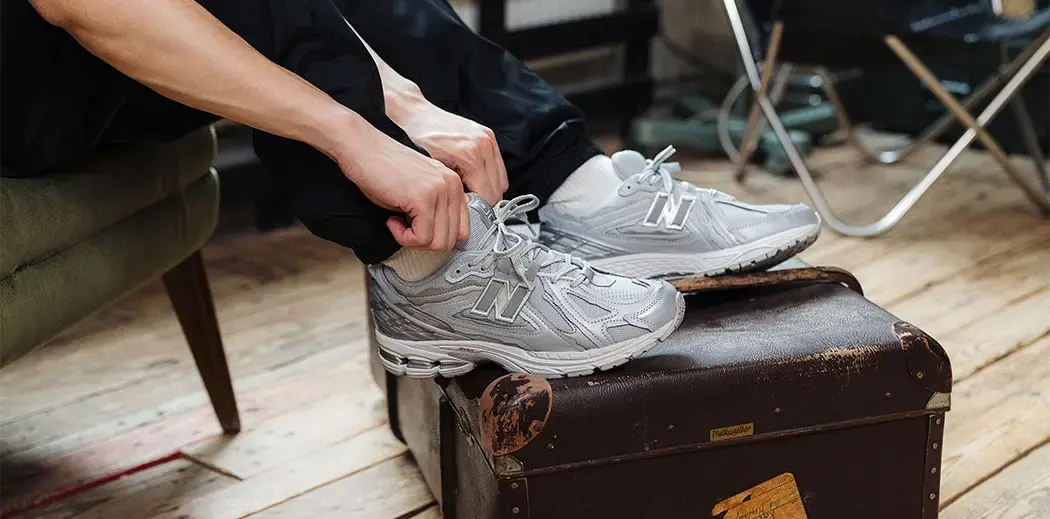
Where it falls short
- shock absorption for repetitive impact
- modern foam responsiveness
- lightweight running efficiency
- energy return
Reality check:
Comfort for walking ≠ protection for running.
4. New Balance 1906 vs Real Running Shoes
| Feature | NB 1906 | Modern Running Shoe |
|---|---|---|
| Intended use | Lifestyle | Running |
| Cushioning | Comfortable | Impact-optimized |
| Weight | Moderate | Lighter |
| Energy return | Low–medium | Medium–high |
| Long-distance support | ❌ | ✅ |
Key takeaway:
The difference isn’t branding — it’s biomechanics.
5. Who Should (and Shouldn’t) Run in the 1906
The 1906 is okay if you:
- run very occasionally
- jog short distances
- want one shoe mainly for walking
- prioritize style over performance
Avoid running in the 1906 if you:
- train consistently
- run more than 2–3 times per week
- have knee, ankle, or foot pain
- care about performance efficiency
Straight answer:
If running is important to you, buy a real running shoe.
FAQs
Q1: Is the New Balance 1906 marketed as a running shoe today?
No. It’s sold primarily as a lifestyle sneaker.
Q2: Can I use the 1906 for the gym?
Light gym use is fine — but not high-impact cardio.
Q3: Why does the 1906 look like a running shoe?
It’s inspired by performance runners from the early 2000s.
Q4: Will running in the 1906 cause injury?
Not immediately — but it increases risk over time.
What Brands Can Learn from the New Balance 1906
The New Balance 1906 shows how performance design can evolve into lifestyle positioning — but that doesn’t change function.
At 👉 https://fukigymwear.com/
we help brands clearly separate:
- performance products vs lifestyle products
- visual tech vs functional tech
- comfort wear vs training gear
What We Support
- performance vs lifestyle product strategy
- honest use-case definition
- long-wear and impact testing
- consumer expectation alignment
- low-MOQ OEM / ODM manufacturing
- private-label activewear & footwear
A shoe can look like it’s made for running —
but what matters is what your body feels after mile three.

