
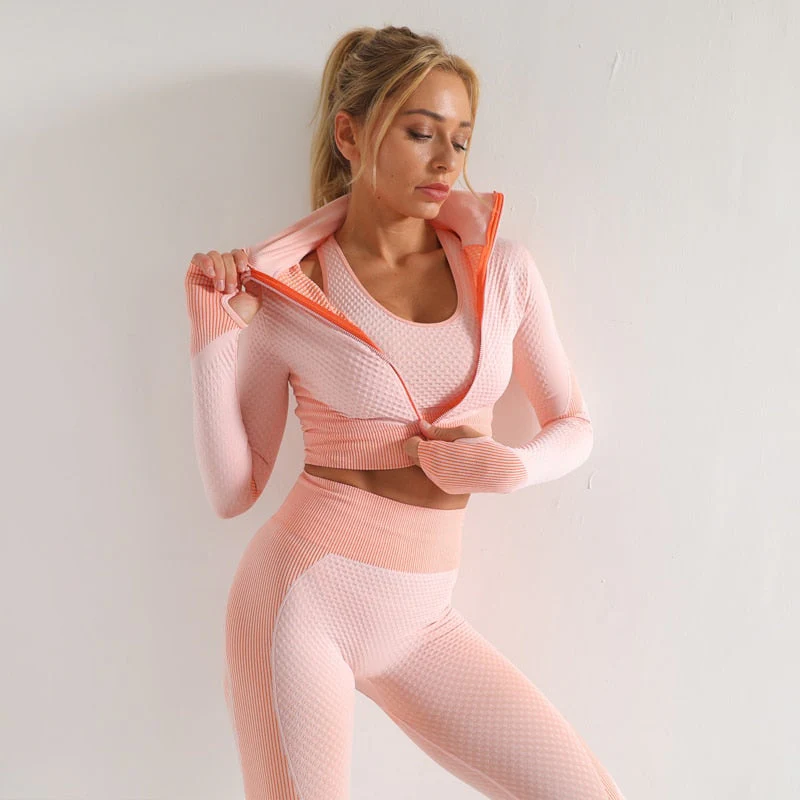
When you place an OEM order for gym wear, the fabric swatch might look perfect — but what happens after 50 wash cycles? Does the color bleed onto white trim? Will the seams hold during a heavy deadlift session? These are the questions that performance testing answers before your shipment leaves the factory. For fitness brands sourcing from China and Southeast Asia, understanding activewear testing standards is not optional — it is the difference between a five-star review and a chargeback tsunami.
Table of Contents
- Why Performance Testing Matters for OEM Activewear
- Key Test Categories Every Brand Should Specify
- International Testing Standards: ASTM, ISO, and AATCC Compared
- How to Choose a Third-Party Testing Lab
- Performance Testing Cost Breakdown for OEM Orders
- Integrating Testing into Your Production Timeline
- Common Test Failures and How to Prevent Them
- Common Questions About Activewear Performance Testing
Why Performance Testing Matters for OEM Activewear
Activewear endures far more stress than everyday clothing. A pair of leggings gets stretched during squats, soaked in sweat during HIIT, and washed at high frequency. Without formal testing, you are gambling on fabric performance. According to Statista, the global sportswear market is projected to reach USD 455 billion by 2028, and with that growth comes increasing consumer expectations around durability, color retention, and fit consistency.
For OEM brands, performance testing serves three critical functions: it validates supplier claims about fabric specifications, it provides documentation for retail compliance (especially important for brands selling into the EU and North America), and it gives you a defensible quality benchmark when negotiating with factories. A brand that walks into a factory meeting with an AATCC test report in hand commands a very different conversation than one relying on a hand-feel assessment.
Testing also protects your brand from the most expensive kind of failure — the one discovered by customers. Replacement costs, refunds, and reputational damage from pilling leggings or bleeding sports bras routinely exceed the cost of a full test panel by orders of magnitude.
Key Test Categories Every Brand Should Specify
Not all tests apply to every product. A compression top needs different testing than a yoga towel. Below are the core categories ranked by relevance to most fitness apparel OEM orders, with guidance on when each is necessary.
Dimensional Stability (Shrinkage and Growth)
Measures how much a garment changes dimension after washing and drying. For gym wear, which is laundered frequently, this is arguably the single most important test. A size-medium legging that shrinks to a size-small after five washes will generate returns regardless of how good the fabric feels on day one. Standard methods: ASTM D7371, AATCC 135, ISO 5077.
Color Fastness
Covers resistance to washing (AATCC 61), perspiration (AATCC 15), crocking/rubbing (AATCC 8), and light exposure (AATCC 16). For activewear with color-blocking or contrast panels, crocking and wash fastness are non-negotiable — color bleeding from a dark panel onto a light one is one of the most common quality complaints in gym apparel. The AATCC testing protocols are the global benchmark for textile color fastness evaluation.
Tensile Strength and Seam Slippage
Tests how much force fabric and seams can withstand before breaking or stretching permanently. Critical for compression garments, leggings, and any product with significant stretch during use. Standards: ASTM D5034 (fabric strength), ASTM D1683 (seam strength). For brands using OEKO-TEX certified fabrics, verifying that the certification covers mechanical performance as well as chemical safety is an important due-diligence step.
Abrasion and Pilling Resistance
Simulates the friction that occurs during wear — think inner-thigh rubbing in leggings or backpack-strap contact on a tank top. Martindale (ASTM D4970) and Wyzenbeek methods are standard. Pilling is particularly visible on dark solid-color fabrics and is one of the first signs of poor-quality yarn selection.
Moisture Management
Tests how quickly fabric wicks, spreads, and dries moisture. For performance activewear marketed as "moisture-wicking" or "quick-dry," this test substantiates marketing claims. Standard: AATCC 195 (Liquid Moisture Management Properties). For a deeper dive into moisture-wicking fabric selection, see our Moisture-Wicking Activewear: OEM Fabric Selection Guide.
International Testing Standards: ASTM, ISO, and AATCC Compared
One of the most confusing aspects of OEM quality control is navigating the alphabet soup of testing standards. The table below breaks down the three dominant systems and where each is most commonly required.
| Standard Body | Primary Market | Key Tests for Activewear | Lab Availability | Cost Level |
|---|---|---|---|---|
| ASTM (American Society for Testing and Materials) | North America | D5034 Tensile, D4970 Pilling, D7371 Shrinkage, D1683 Seam Strength | Widely available in China (SGS, Intertek, Bureau Veritas) | $$ |
| ISO (International Organization for Standardization) | EU, Middle East, Asia-Pacific | ISO 5077 Shrinkage, ISO 12945 Pilling, ISO 13934 Tensile, ISO 105 Color Fastness | Available at major labs; less common at smaller Chinese labs | $$$ |
| AATCC (American Association of Textile Chemists and Colorists) | Global (color and chemical testing) | AATCC 61 Wash Fastness, AATCC 15 Perspiration, AATCC 8 Crocking, AATCC 195 Moisture Management | Well-supported across major international labs | $$ |
For brands entering the North American market, specifying ASTM and AATCC standards is the safest route. EU-bound brands should lean on ISO equivalents, though most major labs can cross-reference and report against multiple standards from a single test run. Confirming that your factory holds WRAP certification alongside these testing capabilities adds an additional layer of social-compliance assurance that retailers increasingly require.
How to Choose a Third-Party Testing Lab
Relying on factory in-house test reports is a mistake many first-time OEM buyers make. Independent third-party testing eliminates the conflict of interest and provides legally defensible documentation. When selecting a lab, evaluate these factors:
Accreditation: The lab should hold ISO/IEC 17025 accreditation, which certifies technical competence. Check the specific scope — a lab accredited for textiles is not automatically competent in leather or footwear testing.
Location: For brands manufacturing in China, using a lab near your production hub (Guangzhou, Hangzhou, Dhaka) reduces sample shipping time and cost. Major international labs — SGS, Intertek, Bureau Veritas, TUV Rheinland — all maintain extensive networks in Chinese manufacturing cities.
Turnaround Time: Standard test panels typically take 5–7 business days. Rush service (2–3 days) is available at a premium. Factor this into your production timeline — testing should never be the bottleneck that delays a shipment.
Reporting Format: Confirm that the lab's reports include pass/fail thresholds against the standards you specified. A raw data readout without interpretation is of limited use to a brand without an in-house textile engineer.
Industry Specialization: Labs with activewear-specific experience understand the nuance of stretch-recovery testing on elastane blends and moisture management on performance knit constructions. Ask for references from other fitness apparel brands they have served. Many labs that serve the broader textile industry also support GRS (Global Recycled Standard) verification, which is valuable if your brand uses recycled polyester or nylon.
Performance Testing Cost Breakdown for OEM Orders
Testing costs vary by lab, location, and test scope. The table below provides approximate ranges for a standard activewear test panel on a single fabric/color combination, based on 2026 pricing at major labs in China.
| Test Category | Individual Test Cost (USD) | Recommended Panel | Turnaround (Business Days) | MOQ Impact |
|---|---|---|---|---|
| Dimensional Stability | $40–$60 | Essential for all products | 3–5 | None |
| Color Fastness (Wash + Crock + Perspiration) | $90–$130 (bundle) | Essential for multi-color garments | 5–7 | None |
| Tensile + Seam Strength | $60–$90 | Essential for compression and leggings | 5–7 | None |
| Pilling Resistance | $40–$55 | Recommended for brushed/peached fabrics | 5–7 | None |
| Moisture Management | $80–$110 | Essential if marketing "wicking" claims | 5–7 | None |
| Full Panel (all above) | $310–$445 | Per fabric/color combination | 7–10 | Cost amortized over production run |
For a typical OEM order of 500–1,000 units per SKU, the full panel cost of $310–$445 per fabric represents roughly $0.30–$0.90 per unit — a negligible investment relative to the cost of a quality-related recall or return wave. Testing multiple colorways of the same fabric typically costs 40%–60% less per additional color since many structural tests do not need repeating.
For guidance on how sizing specifications interact with testing, refer to our Size Grading for Gym Wear: OEM Standards and Fit Rules guide, which covers how dimensional stability results should inform your grade rules.
Integrating Testing into Your Production Timeline
Testing should never be a last-minute add-on. The most efficient OEM quality assurance workflow embeds testing at three distinct checkpoints:
Pre-Production (Lab Dip and Fabric Approval): Before bulk fabric is cut, submit a lab-dip sample and a fabric swatch from the actual production lot for dimensional stability, color fastness, and pilling. This catches problems when the fix is still just adjusting the dye formula or finishing process — far cheaper than reworking finished garments.
During Production (Inline Inspection): Pull random garments from the line and conduct on-site checks for seam strength and visual defects. While not a replacement for lab testing, inline inspection catches systemic issues — a mis-calibrated sewing machine that is producing weak seams, for example — before the entire order is affected. This is also the point to verify that textile testing requirements specified in the tech pack are being followed by the production team.
Pre-Shipment (Final Random Inspection): Conduct AQL-based sampling and pull specimens for a final round of lab testing if your brand requires a certificate of analysis for each shipment. This is especially important for brands that sell through retailers with their own compliance requirements.
Building testing into the production calendar from day one prevents the all-too-common scenario where a brand discovers a dye migration issue three days before the container is scheduled to leave port. For brands using printed activewear, our Sublimation Printing for Activewear: OEM Brand Guide covers additional testing considerations for printed fabrics, including sublimation fastness and design durability.
Common Test Failures and How to Prevent Them
Understanding the most frequent failure modes in activewear testing allows you to write better tech packs and select more reliable suppliers. Below are the top five failure points and their root causes.
| Failure Type | Common Root Cause | Prevention Strategy | Severity |
|---|---|---|---|
| Excessive Shrinkage (>5%) | Fabric not pre-shrunk; insufficient heat-setting of synthetic fibers | Require pre-shrunk fabric certificate; specify heat-set polyester/nylon | Critical |
| Color Bleeding on Multi-Color Garments | Poor dye fixation; incompatible dye types on adjacent panels | Specify AATCC 61 Grade 4 minimum; avoid mixing reactive and disperse dyes without compatibility check | Critical |
| Seam Slippage Under Load | Incorrect stitch type or stitch density for fabric weight | Specify stitch type (e.g., 514 overlock for knits) and minimum SPI in tech pack | Critical |
| Pilling After 20+ Washes | Short-staple fibers; low-twist yarns; insufficient singeing | Specify minimum yarn twist factor; require singeing for cotton-blend fleece; test at development stage | High |
| Stretch Recovery Failure | Insufficient elastane content or poor-quality spandex | Specify branded elastane (Lycra, Creora); require minimum 90% recovery after ASTM D2594 | Critical |
The single most effective prevention strategy is writing a detailed tech pack that includes pass/fail thresholds for every relevant test standard, rather than relying on the factory's interpretation of "good quality." A tech pack that says "color should not bleed" is ambiguous; one that says "AATCC 61 Grade 4 minimum, all adjacent fabrics" is enforceable.
Additionally, requiring your factory to hold current OEKO-TEX STANDARD 100 certification for chemical safety ensures that at minimum, the raw materials entering production meet a baseline chemical standard — though this does not replace physical performance testing.
Common Questions About Activewear Performance Testing
How many test samples does a typical lab require
Most labs require 1–2 linear meters of fabric or 3–5 finished garments per test panel. For color fastness testing on multi-color garments, you may need to submit additional specimens for each color combination being evaluated. Always confirm sample requirements with your lab before cutting — insufficient samples are the most common reason for testing delays.
What is the difference between in-house factory testing and third-party lab testing
In-house factory tests are performed by the manufacturer's own quality control team using their own equipment, with no external oversight. Third-party lab tests are conducted by an independent, accredited laboratory that has no financial interest in the test outcome. For compliance documentation and retail partner requirements, only third-party reports from ISO/IEC 17025 accredited labs carry legal and commercial weight.
Can performance testing be done on prototype samples or only on production fabric
Both. Prototype-level testing is valuable for vetting fabric candidates before committing to bulk orders. However, final certification testing should always be done on fabric from the actual production lot, as dye lots, finishing batches, and even seasonal humidity variations can produce different results. Smart brands test at both stages: prototype for selection, production for verification.
How do I write test requirements into an OEM purchase contract
Include a dedicated quality specification appendix in your purchase agreement that lists: (a) the specific test standards required (e.g., AATCC 61 Grade 4), (b) the accredited lab that will perform testing, (c) who bears the testing cost, and (d) the consequences of failure — typically factory-paid re-testing and a cost reduction or remake obligation for non-conforming goods. Ambiguous quality clauses are unenforceable; specific ones protect both parties by setting clear expectations.
Do I need separate testing for each color of the same style
Generally yes for color fastness and light fastness, since different dyes perform differently. For structural tests (dimensional stability, tensile strength, pilling), one color per fabric construction is usually sufficient if the base fabric is identical. Discuss with your lab to optimize the test matrix — testing every color for every property is unnecessary and expensive.
What certifications do retailers typically require beyond performance testing
Beyond physical test reports, major retailers increasingly require: OEKO-TEX STANDARD 100 or similar chemical safety certification, WRAP or BSCI social compliance audit for the production facility, and country-of-origin documentation. Some specialty retailers (e.g., REI, Lululemon) have their own restricted substance lists (RSLs) that exceed regulatory minimums. Confirming these requirements before production avoids costly last-minute compliance gaps.
