
When you think of performance sportswear, brands like Under Armour, Nike, and Adidas come to mind.
But among them, Under Armour has carved its niche — not through flashy logos, but through material innovation.
As someone working directly with technical sportswear fabrics, I’ve seen firsthand how Under Armour transforms fiber technology into high-performance gear.
Let’s break down how the brand keeps pushing the limits of material science.
Table of Contents
- The Foundation of Under Armour’s Fabric Innovation
- Key Technologies that Changed the Game
- How Fabric Engineering Improves Athlete Performance
- Sustainability in Material Development
- Comparison: Under Armour vs Nike vs Adidas
- What Startups Can Learn from Under Armour’s Innovation Model
- FAQs
- About FuKi Gymwear – Custom Sportswear Manufacturing
1. The Foundation of Under Armour’s Fabric Innovation
Under Armour began in 1996 with a simple mission:
“To make athletes better through passion, design, and innovation.”
Their first breakthrough wasn’t a shoe — it was a moisture-wicking compression shirt made of synthetic microfiber.
While cotton absorbed sweat, UA’s fabric pulled moisture away from the skin, keeping athletes dry and light.
💬 This was the birth of “performance apparel” as we know it today.
2. Key Technologies that Changed the Game
Under Armour’s success comes from consistently investing in fabric technology that solves real athletic problems.
Here are their most notable material innovations:
| Technology | Purpose | Description |
|---|---|---|
| HeatGear® | Cooling & sweat-wicking | Lightweight fabric that keeps athletes cool in hot conditions |
| ColdGear® | Warmth & insulation | Dual-layer fabric with brushed interior and smooth exterior for cold-weather sports |
| UA RUSH™ | Recovery enhancement | Infused with minerals that reflect energy back into muscles for better endurance |
| UA HOVR™ (footwear) | Energy return | Foam compound that minimizes impact and returns energy to each step |
| Storm Technology | Weather resistance | Water-repellent coating without sacrificing breathability |
🧵 What’s smart is that UA designs materials around function, not just aesthetics — every innovation has an athletic purpose.
3. How Fabric Engineering Improves Athlete Performance
Unlike traditional textiles, UA’s fabrics are engineered at the molecular level.
This creates real physiological advantages for wearers:
| Benefit | Fabric Engineering Method | Result |
|---|---|---|
| Sweat management | Hydrophobic yarns with micro-channels | Fast-drying surface |
| Compression control | Multi-layer knitting tension zones | Improved blood circulation |
| Temperature regulation | Dual-layer insulation systems | Cool in heat, warm in cold |
| Durability | High-twist synthetic fibers | Long lifespan & shape retention |
💬 In our OEM experience at FuKi Gymwear, these technologies are now inspiring next-gen startup brands to build performance-driven collections.
4. Sustainability in Material Development
In recent years, Under Armour has begun integrating eco-friendly materials into its supply chain.
Key initiatives include:
- Using recycled polyester and nylon across apparel lines.
- Partnering with Bluesign®-approved mills to minimize chemical waste.
- Developing biodegradable prototypes for future athletic wear.
♻️ The company’s “UA Green Machine” aims to recycle worn-out textiles into new fibers — part of their circular design vision.
5. Comparison: Under Armour vs Nike vs Adidas
| Brand | Key Material Technology | Focus | Strength |
|---|---|---|---|
| Under Armour | HeatGear®, ColdGear®, UA RUSH™ | Performance-driven innovation | Functionality |
| Nike | Dri-FIT™, Flyknit™, AeroAdapt™ | Speed & comfort | Advanced R&D |
| Adidas | Primeknit™, AEROREADY™, Parley | Sustainability | Eco-materials |
| FuKi Gymwear | Custom-engineered nylon-spandex | OEM flexibility | Affordable quality innovation |
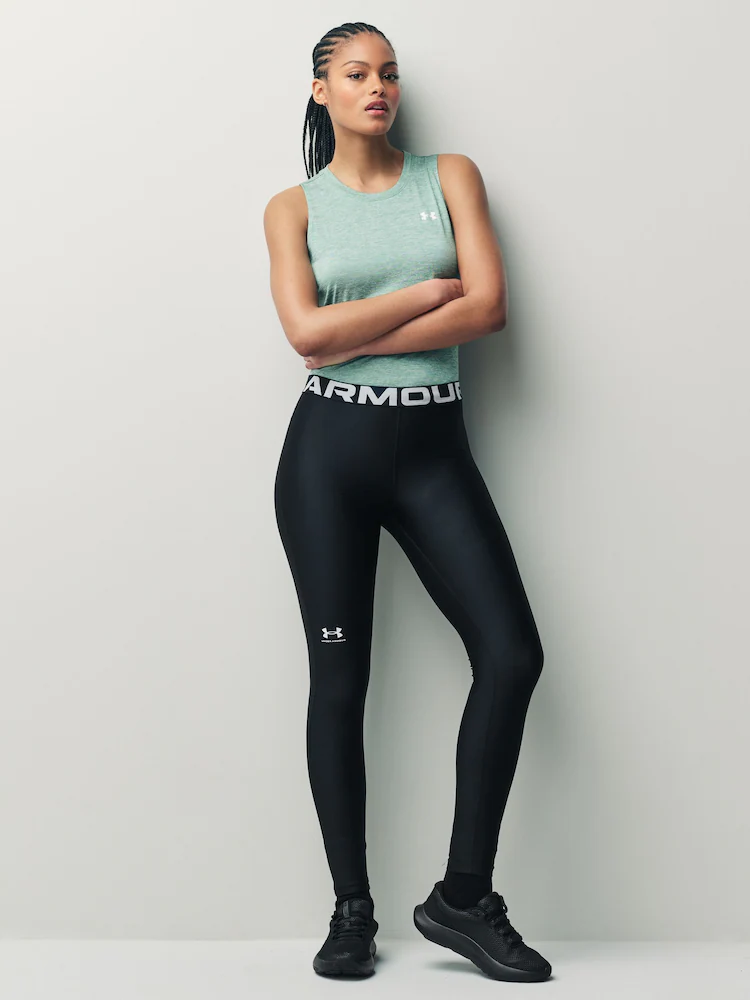
💬 Under Armour leads in sports-engineered function, while brands like FuKi Gymwear make similar-quality performance fabrics accessible to smaller B2B clients.
6. What Startups Can Learn from Under Armour’s Innovation Model
Here’s what new fitness brands can take away from UA’s innovation strategy:
✅ Solve real problems. Every material should serve a clear athletic purpose.
✅ Invest in R&D early. Even small improvements in comfort or stretch can define your brand.
✅ Test performance rigorously. Sweat, stretch, abrasion — never skip the lab stage.
✅ Work with flexible OEMs. Partner with manufacturers that understand functional fabric engineering — like FuKiGymwear.com.
💬 Innovation isn’t about inventing new yarn — it’s about rethinking how fabric interacts with movement.
7. FAQs
Q1. What materials does Under Armour use most often?
Primarily polyester, nylon, and elastane blends designed for compression and moisture management.
Q2. Is Under Armour investing in sustainable fabrics?
Yes — the brand is increasing its use of recycled yarns and eco-certified suppliers.
Q3. What makes UA fabrics different from Nike’s?
UA focuses on temperature and compression control, while Nike emphasizes lightweight performance.
Q4. Can smaller brands replicate UA’s performance quality?
Yes. OEM partners like FuKi Gymwear specialize in creating similar performance-grade fabrics for startup brands with low MOQs.
8. About FuKi Gymwear – Custom Sportswear Manufacturing
At FuKiGymwear.com, we help global brands and startups develop performance-grade activewear inspired by industry leaders like Under Armour.
Our Capabilities Include:
- Custom fabric engineering: compression knit, seamless nylon-spandex, recycled polyester
- OEM & ODM production (Low MOQ 100 pcs)
- Rapid sampling (7–10 days) and mass production (25–35 days)
- Certified sustainable factories: OEKO-TEX®, BSCI, and GRS
- Private label & logo customization for growing brands
💬 We translate advanced sportswear technologies into scalable, premium-quality collections — empowering new brands to compete globally.
👉 Ready to create performance wear that rivals Under Armour?
Start your custom project today at FuKiGymwear.com.
