
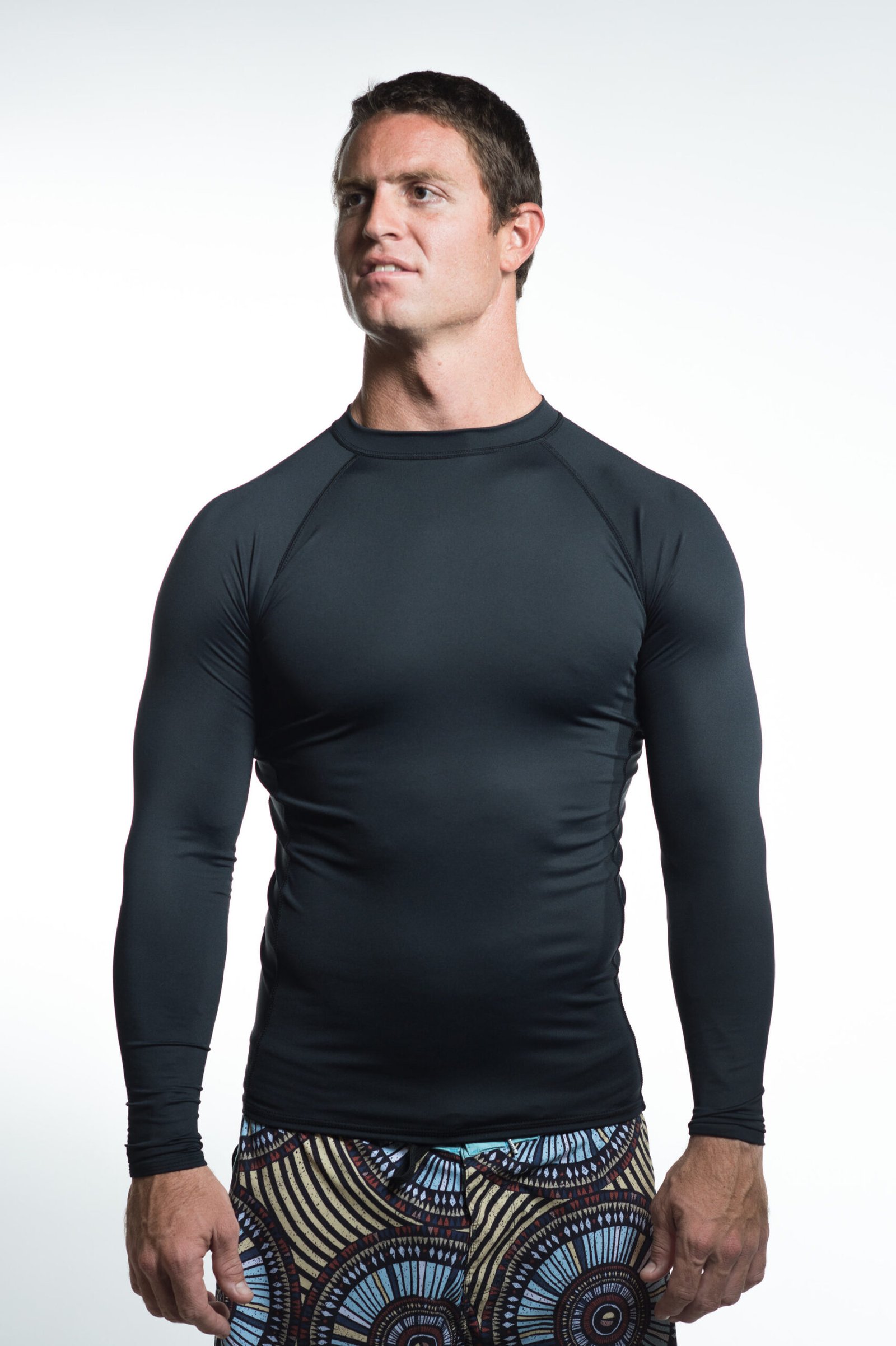
Table of Contents
- Overview of Rash Guard OEM Production
- UPF Fabric Specifications & Material Science
- Pattern Engineering & Sizing Systems
- Manufacturing Workflow: Cutting to QC
- MOQ Negotiation & Cost Structure
- Certification & Compliance Requirements
- Rash Guard vs Other Activewear: OEM Comparison
- Common Questions About Rash Guard Sourcing
- Summary & Action Plan
Overview of Rash Guard OEM Production
Rash guards have evolved from niche surf wear into a mainstream fitness essential, driving a surge in B2B OEM demand across gym brands, swim studios, and outdoor athletics retailers. The global activewear market reached $350 billion in 2025, with rash guards capturing an increasingly visible segment thanks to their UPF protection, compression benefits, and year-round versatility.
For fitness brands looking to add rash guards to their product line, OEM production offers the most scalable path. Rather than investing in in-house manufacturing equipment and fabric R&D, brands partner with specialized factories in China, Vietnam, and Indonesia that already possess the technical infrastructure for sublimation printing, flatlock seaming, and UPF-certified fabric sourcing.
This blueprint walks you through every production decision point: from selecting the right fabric composition and weight to negotiating MOQs, engineering patterns that fit diverse body types, and navigating the certification landscape. Whether you are launching your first rash guard collection or expanding an existing activewear catalog, these specs and workflows will reduce sourcing friction and accelerate your go-to-market timeline.
UPF Fabric Specifications & Material Science
Core Fabric Compositions
Rash guard performance hinges on fabric choice. The three dominant compositions in OEM production each serve different brand positioning:
| Fabric Blend | Typical Weight (GSM) | UPF Rating | Best Use Case | Price Range (USD/m) |
|---|---|---|---|---|
| 88% Polyester / 12% Spandex | 180-220 | UPF 50+ | Surf & outdoor training | $3.50-5.80 |
| 82% Nylon / 18% Elastane | 190-230 | UPF 50+ | High-end compression fit | $5.20-8.50 |
| 85% Recycled Poly / 15% Spandex | 175-210 | UPF 30-50 | Sustainable brand lines | $4.80-7.20 |
Polyester-spandex blends dominate the mid-market due to their cost efficiency, excellent sublimation color fastness, and quick-dry properties. Nylon-elastane blends command higher prices but deliver superior chlorine resistance and a softer hand feel, making them the default choice for premium swim-and-gym crossover brands. Recycled polyester options, certified under the Global Recycled Standard (GRS), are increasingly requested by brands targeting eco-conscious consumers.
UPF Certification & Testing Protocols
UPF (Ultraviolet Protection Factor) ratings are not marketing claims—they require laboratory verification. The OEKO-TEX Standard 100 testing protocol and ASTM D6603 are the two most recognized frameworks for UV protection validation in activewear fabrics.
For UPF 50+ claims, the fabric must block at least 98% of UV radiation. Factories typically submit fabric swatches to SGS, Intertek, or Bureau Veritas for testing before bulk production. Lead time for UPF lab reports is 5-7 business days, and costs range from $150-300 per fabric variant. Brands should budget for this testing in their initial production run and request updated certificates annually.
Moisture Management & Durability Metrics
A rash guard that clings wet is a customer complaint waiting to happen. Key performance indicators OEM buyers should specify:
- Wicking rate: AATCC 195 test, target >80% moisture spread within 5 seconds
- Pilling resistance: Martindale test, minimum 20,000 cycles for Grade 3+
- Chlorine resistance: ISO 105-E03, color change ≤Grade 4 after 5 cycles (critical for swim crossover)
- Stretch recovery: 95%+ elastic recovery after 100 extension cycles
Specifying these metrics in your tech pack eliminates ambiguity and gives factories clear pass/fail criteria for quality control during production.
Pattern Engineering & Sizing Systems
Rash Guard Pattern Architecture
Rash guard patterning differs significantly from standard T-shirt construction. The garment must deliver compression without restriction, maintain seamless movement during overhead reaches, and prevent ride-up during dynamic activity. Three pattern approaches dominate OEM production:
| Pattern Type | Construction Method | Fit Profile | Production Complexity | Typical MOQ |
|---|---|---|---|---|
| Raglan sleeve | 2-piece sleeve + body panels | Moderate compression, sporty silhouette | Standard | 300-500 pcs/style |
| Set-in sleeve with gusset | Traditional shoulder + underarm gusset | Targeted compression, anatomical fit | Medium-high | 500-800 pcs/style |
| Panelled compression | 6-8 body panels with zone compression | High compression, performance racing | High | 800-1200 pcs/style |
Grading & International Sizing
Sizing consistency is a top complaint in activewear e-commerce. For rash guards targeting international markets, OEM buyers should specify a dual-sizing system:
- US market: XS-XL with 2-inch grade rules between sizes
- EU/Asia market: Size 34-44 (EU) with proportional chest and torso adjustments
Request size charts from your factory that map both systems, and always validate grading with a fit session across 3+ body types before approving bulk production. Factories that have produced for US activewear brands (like those serving the global fitness apparel sector) will typically have grading libraries you can reference rather than building from scratch.
Flatlock & Bonded Seam Options
Seam construction is the single most visible quality signal in rash guards. Two options prevail:
- Flatlock stitching: 4-thread overlock creating a flat, comfortable seam. Standard for mid-market production. Cost-effective, durable, and widely available across Chinese factories.
- Bonded/taped seams: Ultrasonic or adhesive bonding eliminating stitch lines entirely. Premium positioning, higher unit cost (+$1.20-2.50/piece), limited factory availability.
For first production runs, flatlock is the pragmatic default. Reserve bonded seams for premium sub-lines once volume and factory capability are established.
Manufacturing Workflow: Cutting to QC
A typical rash guard OEM production cycle spans 25-35 days from order confirmation to shipment. The workflow breaks into six stages:
| Stage | Duration | Key Activities | BuyerCheckpoint |
|---|---|---|---|
| Fabric sourcing & testing | 7-10 days | Mill ordering, UPF/pilling lab tests | Approve test reports |
| Pattern & sample | 5-7 days | Digital pattern, prototype sample, fit review | Sign off on fit & specs |
| Bulk cutting | 2-3 days | Auto-spreader cutting, bundle numbering | Verify yield & waste rate |
| Sewing & sublimation | 7-10 days | Flatlock assembly, all-over print sublimation | Random inline inspection |
| Finishing & QC | 3-4 days | Label attachment, final measurement, AQL inspection | Approve final QC report |
| Packing & shipping | 2-3 days | Polybag, carton packing, logistics booking | Confirm shipping docs |
Sublimation Printing Considerations
All-over sublimation printing is the most popular decoration method for rash guards because it enables unlimited color complexity without additional cost per design. However, sublimation has specific requirements:
- Works only on polyester-based fabrics (nylon blends require transfer paper adaptation)
- Design files must be vector-based at 300 DPI minimum with CMYK color profiles
- Cut-and-sew sublimation (printing before cutting) minimizes seam misalignment vs. panel printing
- Color consistency across production lots requires color calibration prints approved before bulk run
Factories that specialize in sublimation typically have in-house heat transfer machines (330-400°C roller presses) and digital sampling capabilities, reducing the iteration cycle from 5 days to 2-3 days for design revisions.
AQL Inspection Standards
Rash guard QC should follow AQL 2.5 for major defects and AQL 4.0 for minor defects per ISO 2859-1. Common defect categories specific to rash guards:
- Seam puckering or skipped stitches on flatlock seams
- Sublimation ghosting or color bleed at seam junctions
- Incorrect UPF labeling (regulatory risk in US/EU markets)
- Size measurement deviation exceeding ±1cm tolerance
- Stretch recovery below specified threshold after wash testing
Request a pre-shipment inspection (PSI) from an independent QC firm such as WRAP-certified facilities or SGS/Intertek field teams. This adds $200-400 per inspection but catches defects before they reach your customers.
MOQ Negotiation & Cost Structure
Understanding MOQ Tiers
Minimum order quantities for rash guards vary dramatically based on fabric sourcing, printing complexity, and factory scale. Here is a realistic tier breakdown:
| MOQ Tier | Quantity (pcs) | Unit Price Range | Factory Profile | Lead Time |
|---|---|---|---|---|
| Startup / Sample | 100-300 | $8.50-14.00 | Small workshop, limited fabric stock | 30-45 days |
| Standard | 500-1000 | $5.80-9.00 | Mid-size factory, standard fabric library | 25-35 days |
| Volume | 2000-5000 | $3.50-6.20 | Large factory, custom fabric sourcing | 20-30 days |
| Enterprise | 5000+ | $2.80-4.50 | Integrated mill-factory, fabric produced in-house | 15-25 days |
Cost Component Breakdown
A typical $6.00 mid-market rash guard breaks down as follows:
- Fabric: $2.40-2.80 (40-47% of total cost)
- CMT (Cut-Make-Trim): $1.50-1.80 (25-30%)
- Sublimation printing: $0.80-1.20 (13-20%)
- Labels, packaging, QC: $0.50-0.80 (8-13%)
- Factory margin: $0.30-0.50 (5-8%)
Negotiation leverage increases dramatically at 1000+ pieces because factories can commit bulk fabric orders to mills, reducing per-meter costs by 15-20%. For brands entering at the startup tier, consider consolidating multiple styles on the same fabric base to aggregate volume and access standard-tier pricing.
Payment Terms & Risk Mitigation
Standard payment structures for OEM rash guard production:
- 30% deposit upon order confirmation (covers fabric procurement)
- 40% mid-payment after sample approval and bulk cutting start
- 30% balance before shipment, after PSI clearance
New brand-factory relationships often require 50% upfront, reducing to 30% after 2-3 successful production cycles. Using trade assurance platforms (Alibaba Trade Assurance, Sinosure) provides recourse if the factory fails to deliver on spec or schedule.
Certification & Compliance Requirements
Mandatory & Voluntary Certifications
Rash guards sold in the US, EU, and Australian markets face specific regulatory frameworks:
| Certification | Market | Requirement Level | Approximate Cost | Renewal Cycle |
|---|---|---|---|---|
| UPF labeling (ASTM D6603) | US, AU | Mandatory for UV claims | $150-300/fabric | Annual |
| OEKO-TEX Standard 100 | EU, Global | Voluntary (strong market signal) | $500-1500/certificate | Annual |
| GRS (Global Recycled Standard) | Global | Required for recycled content claims | $800-2000/facility | Annual audit |
| CPSIA (children's sizes) | US | Mandatory for kids' sizing | $200-400/test batch | Per production lot |
| REACH compliance | EU | Mandatory (chemical substance limits) | Included in OEKO-TEX | Annual |
For brands targeting multi-market distribution, the most efficient certification strategy is to source OEKO-TEX certified fabrics (which covers REACH chemical limits) and add UPF testing for US/AU compliance. This dual approach satisfies 90% of global regulatory requirements with two testing processes rather than five.
Labeling Requirements
Proper labeling is non-negotiable for regulatory compliance and brand credibility:
- Fiber content label: FTC-required in US, must show exact percentage composition
- Country of origin: "Made in China" (or actual production country) mandatory in US/EU
- UPF rating tag: Required if making UV protection claims, must cite testing standard
- Care instructions: Machine wash cold, hang dry (standard for poly-spandex rash guards)
- Brand logo / hang tag: Supplied by buyer, attached by factory
Rash Guard vs Other Activewear: OEM Comparison
Rash guard production shares infrastructure with several other activewear categories, but differs in critical ways that affect sourcing decisions:
| Dimension | Rash Guards | Compression Tops | Swimwear Tops | Performance Tees |
|---|---|---|---|---|
| Primary fabric | Poly/spandex or nylon/elastane | Nylon/elastane dominant | Nylon/elastane or PBT | Poly/spandex or poly/cotton |
| UPF requirement | UPF 50+ (mandatory for claim) | Not typical | Varies by market | Not typical |
| Key seam type | Flatlock or bonded | Flatlock + bonded panels | Bonded/overlock | Standard overlock |
| Sublimation compatibility | Excellent (poly-based) | Good | Limited (nylon challenges) | Excellent |
| MOQ (standard tier) | 500-1000 pcs | 800-1500 pcs | 300-600 pcs | 500-1000 pcs |
| Chlorine resistance needed | Yes (for swim crossover) | No | Yes (essential) | No |
| Average unit cost (mid-market) | $5.80-9.00 | $6.50-10.00 | $4.50-7.50 | $3.50-6.00 |
This comparison highlights that rash guards sit at the intersection of compression wear and swimwear production capability. When selecting a factory, prioritize those with proven experience in both categories rather than general activewear manufacturers who may lack UPF testing infrastructure and chlorine-resistance fabric sourcing.
Common Questions About Rash Guard Sourcing
Which fabric blend delivers the best UPF protection for fitness rash guards
88/12 polyester-spandex at 200+ GSM consistently achieves UPF 50+ without chemical treatments, relying on fabric density and fiber structure for UV blocking. Nylon-elastane blends also reach UPF 50+ but at slightly higher cost. Recycled polyester options may require tighter knit structures to match the same UPF rating since recycled fibers sometimes have minor density variation.
How to negotiate lower MOQs when launching a new rash guard line
Three proven strategies: (1) Consolidate multiple styles on the same fabric base to aggregate volume—three rash guard variants on one 88/12 poly-spandex base can qualify for standard-tier pricing at 300 pcs per style. (2) Use the factory's existing fabric stock colors rather than custom-dyed colors, which eliminates mill minimums. (3) Offer flexible delivery scheduling across 2-3 shipment windows, allowing the factory to plan bulk cutting that accommodates smaller per-style quantities.
What certification should fitness brands prioritize for multi-market rash guards
OEKO-TEX Standard 100 plus UPF testing (ASTM D6603) covers the broadest regulatory footprint. OEKO-TEX handles EU REACH chemical compliance and global consumer trust, while ASTM UPF testing satisfies US and Australian labeling requirements for UV protection claims. This two-certificate approach is more cost-effective than pursuing five separate certifications.
Whether bonded seams justify the cost premium over flatlock for gym rash guards
For mid-market fitness brands, flatlock seams deliver 95% of the comfort benefit at 60% of the cost. Bonded seams are justified only for premium sub-lines where zero-seam-visibility is a brand differentiator, or for swim crossover products where seam bulk affects water performance. Most successful OEM rash guard programs start with flatlock and graduate to bonded seams as volume and brand positioning mature.
How sublimation printing affects production lead times for rash guards
Cut-and-sew sublimation adds 3-5 days to the standard CMT timeline because printing occurs before cutting and assembly. Design approval requires a calibration print sample (1-2 days), and color consistency verification adds another checkpoint. Total impact on lead time: approximately 7-10 additional days for the printing workflow, making the full production cycle 30-40 days with sublimation versus 25-30 days for blank or screen-printed alternatives.
What size range should international fitness brands specify for rash guard OEM
XS-XL covers 85% of the US/EU market for fitness rash guards. Adding XXL captures an additional 8-10% without significant grading complexity. Asian markets may require S-XXL with adjusted torso proportions (2-3cm shorter body length per size). Request dual-mapping size charts from your factory and validate across 3+ body types in fit sessions before committing to bulk grading.
Summary & Action Plan
Sourcing rash guards through OEM channels gives fitness brands access to specialized fabric libraries, UPF-certified production infrastructure, and sublimation printing capabilities that would require years and significant capital to build internally. The key decisions that define a successful rash guard program:
- Fabric selection: Start with 88/12 poly-spandex at 200 GSM for cost-efficient UPF 50+ performance
- Seam construction: Flatlock as default, bonded seams reserved for premium sub-lines
- MOQ strategy: Consolidate styles on common fabric bases to access standard-tier pricing at 500+ total units
- Certification: OEKO-TEX + ASTM UPF testing covers multi-market compliance efficiently
- Factory selection: Prioritize factories with dual swimwear/compression experience and in-house sublimation
For brands ready to launch, the recommended action sequence is: (1) Request 2-3 fabric swatches with UPF test reports from candidate factories, (2) Commission prototype samples in your target size range, (3) Validate fit across diverse body types, (4) Approve sublimation calibration prints, (5) Confirm MOQ and pricing at your target volume tier, and (6) Execute production with PSI inspection before shipment.
